English as an Additional Language
Our Approach: Achieve, Belong, Thrive
At Shaftesbury, we are very proud of how many of our children can speak more than one language (2, 3 or sometimes even 4!) and of how many different languages are spoken at school. Quite a few of our pupils are either new to country or at the early stages of learning English. Although these children are below the expected standard in English, they make good progress whilst they are with us, and we work very hard to ensure that this is the best possible progress.
We have two dedicated EAL leaders, Miss Bindra in Y3-4 and Mrs Chilton-Thomas in Y5-6, who support our EAL children in learning English. We follow an integrated approach, meaning EAL pupils learn in a mainstream classroom wherever possible. This ensures pupils develop English through high-quality classroom teaching while accessing the same curriculum as their peers, with appropriate support in place to remove the barriers of learning.
Supporting Learning, Progress and Curriculum Access
To ensure pupils make strong progress from their individual starting points, we use targeted, evidence-informed strategies that support both language development and subject learning:
- Pupils’ language backgrounds, first-language skills, and English proficiency are assessed using the NASSEA framework to help staff understand starting points and plan next steps.
- Teachers use clear explanations, visual support, structured talk, and modelled examples, so pupils can access age-appropriate learning and develop confidence using English.
- Key vocabulary and concepts are introduced in advance to help pupils engage fully with lessons and build the academic language needed across the curriculum.
These approaches ensure that EAL pupils are supported to access ambitious learning and develop increasing independence over time.
Creating Belonging and Positive Relationships
We place a strong emphasis on helping EAL pupils feel safe, respected, and included from the moment they join our school.
- New pupils are supported by a buddy who helps them understand routines, expectations, and school life.
- Pupils are encouraged to draw on their home language where appropriate to support understanding and thinking.
- We celebrate linguistic diversity through our Language of the Month initiative, giving pupils opportunities to share their languages and learn from one another.
These approaches promote positive relationships, confidence, and a strong sense of belonging within the school community.
Helping Pupils Thrive and Grow in Confidence
We support pupils to thrive by creating an inclusive environment that promotes confidence, wellbeing, and independence.
- Targeted small-group and in-class support focusses on developing spoken English, reading comprehension, and confidence using academic language, and is reviewed regularly to ensure it remains effective.
- Our learning environments reflect and value the diversity of our community, with multilingual signage and displays that celebrate pupils’ cultures, languages, and experiences.
As pupils’ confidence and language skills develop, they are supported to participate fully in lessons and wider school life, helping them to flourish both academically and personally.
The Importance of Home Language
We actively encourage families to continue using their home language at home. A strong first language supports the learning of English and helps children develop important skills such as reasoning, reading, and problem-solving. This plays an important role in pupils’ learning, identity, and wellbeing.
Language of the Month (LotM)
Our children speak over 30 languages in school and we love to celebrate this diversity by learning a little of the language and culture of some of these. Our bi-lingual speakers help to promote this and love to show off their skills, as well as teach their friends some of their language.
Language of the Month is a weekly thinking skills lesson to share the languages of our school, to recognise the diversity of the world and give children the opportunity to widen their experiences.
International Mother language Day—21st February 2026
This year's theme is youth voice in multilingual education. As we speak over 40 languages here at Shaftesbury, please can you use greetings in your own language, or a language learnt from our
Language of the Month, to celebrate.
Why it matters—home languages are a connection to our culture, heritage and community.
February 2025 — International Mother Language Day-Shaftesbury celebrates -
Silver Jubilee Celebration of International Mother Language Day
International Mother Language Day was proclaimed by the General Conference of the United Nations Educational, Scientific and Cultural Organization (UNESCO) in November 1999.
Here at Shaftesbury, we celebrated by answering morning and afternoon registration in our home language, celebrating the diversity of our school and community.
The children enjoyed sharing their language and learning the language of their peers.
February 2024 — International Mother Language Day-
International Mother Language Day is observed every year to promote linguistic and cultural diversity and multilingualism.
Here at Shaftesbury, we attended school responding to the register in our own languages. During the day we greeted peers in our own languages and shared new vocabulary with our class.
This experience demonstrates our character values of acceptance, self-motivation and respect.

Refugee week – June 15–21 2026
This year's theme is COURAGE.
Refugee Week 2026 is an important opportunity for children to learn about kindness, inclusion, and the experiences of people who have been forced to leave their homes.
In our school, pupils will take part in a range of activities such as storytelling, creative projects, reading comprehension and discussions that celebrate different cultures and communities. These activities help our children develop empathy, understand the importance of welcoming others, and appreciate the contributions that refugees make to society. Participating in Refugee Week will help our school create a positive environment where every child feels valued and respected.
Our new Language of the Month is -
Arabic is the most widely spoken language in the Middle East. Arabic is the official language of 22 countries. Some of the Arabic loanwords include admiral, arsenal, candy, giraffe, lime, sofa and spinach. M is claimed to be the most common sound in Arabic.
Arabic constructs words from basic roots –
As in other Semitic languages, Arabic has a complex and unusual method of constructing words from a basic root. This means that a pattern of three letters such as ‘k-t-b’, will always be the foundation of words that have the semantic field of ‘writing’, such as the work ‘kitaab’ which means ‘a book’ and ‘maktab’ which means ‘a desk or office’. Using the root system means that direct translation, particularly of poetic texts, is often difficult – the root of a word may contain a meaning that could take a few sentences to translate. However, this can be beneficial, and the beauty of it is that it conveys a depth of both meaning and emotion unmatched by many languages.
The origin of the Arabic Language -
Arabic has been around for more than 2,500 years. Historians believe that the Arabic language came from Arabian Peninsula. Old Arabic was the beginning of Arabic dialects. Safaitic dialect is the earliest dialect in old Arabic, which the Syro-Arabian desert nomadic tribes used.
Arabic mathematical terminology includes words for numbers, functions, and operations.
Numbers -
ṣifr: (صفر) The Arabic word for zero, which was transliterated into Latin as cifra and then into the English word "cipher"
zaghi: Means "even number"
fardi: Means "odd number"
Malayalam -
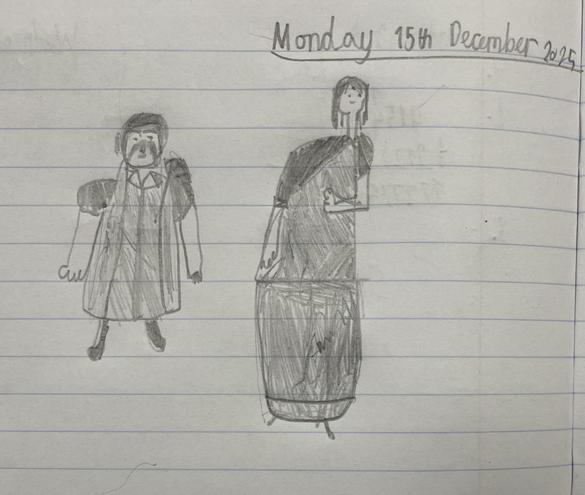
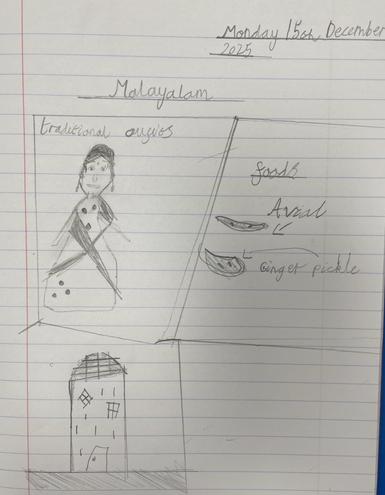
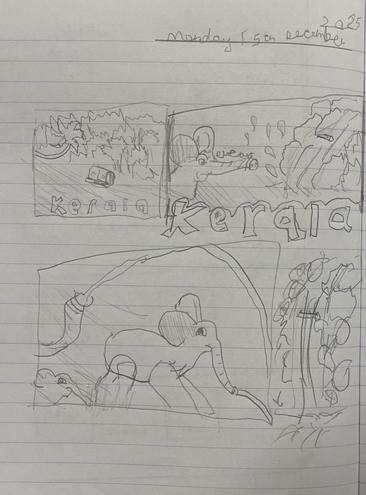
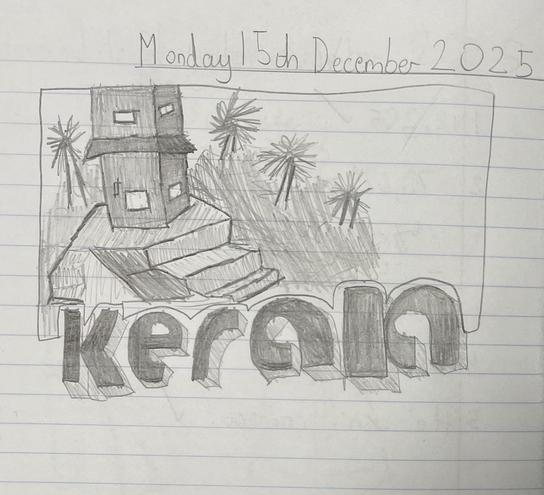
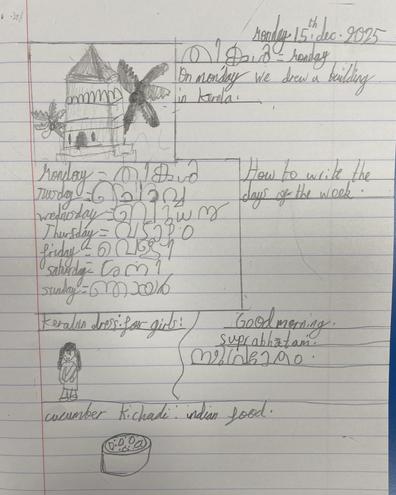
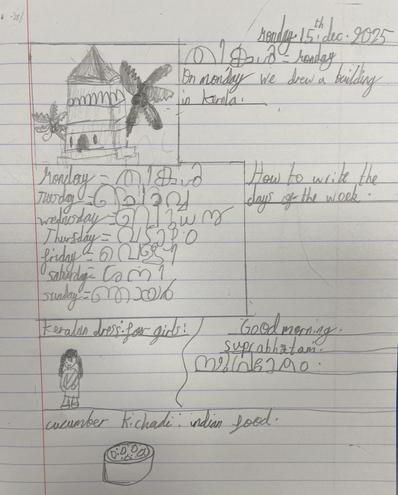
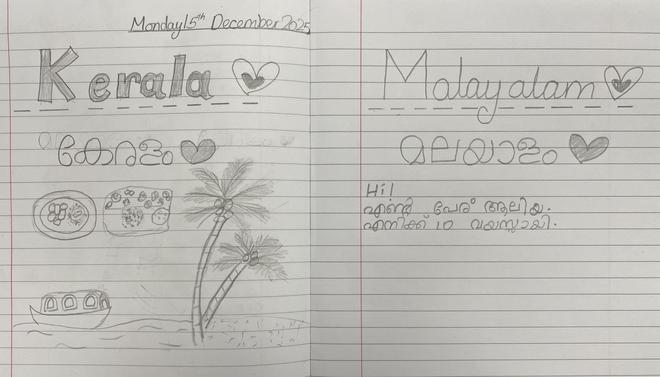
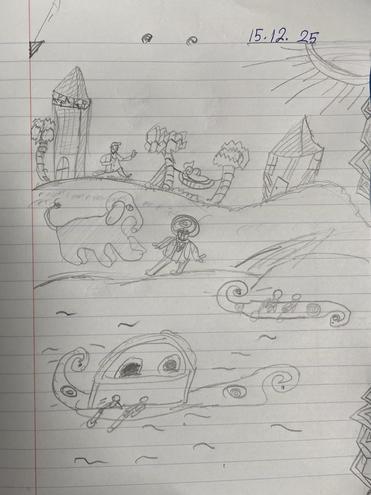
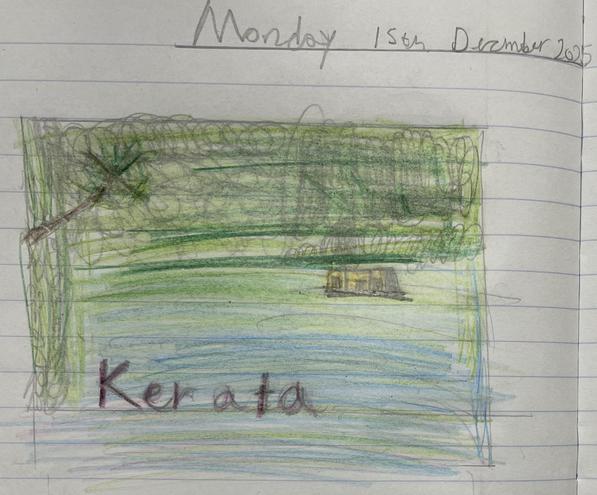
During a previous LotM, some yr 5 pupils drew and wrote postcards in Malayalam.
Black history Month 2025
This year we researched the following people -
Yr 3 and 4 - Malcom X - the 60th anniversary of his assassination
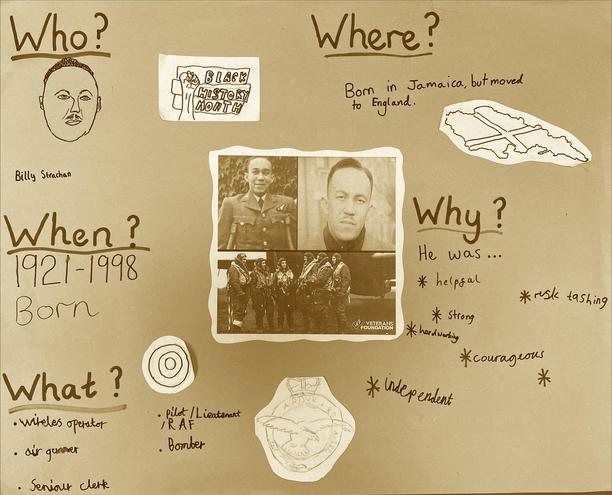
Yr 5 - Billy Strachan - William Arthur Watkin Strachan was a British communist, civil rights activist, and pilot. He is most noted for his achievements as a bomber pilot with the Royal Air Force during the Second World War, and for his reputation as a highly influential figure within Britain's black communities.
Yr6 - looked at the forgotten soldiers - These soldiers served in segregated units and were
often assigned to non-combat roles, despite their willingness to fight for the liberties they were denied at home.
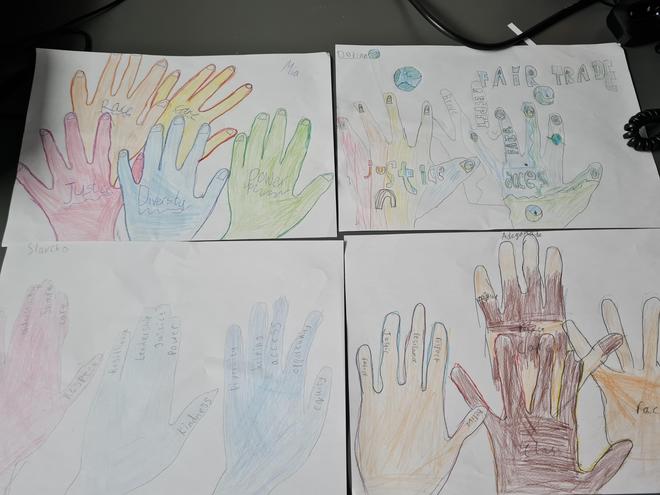
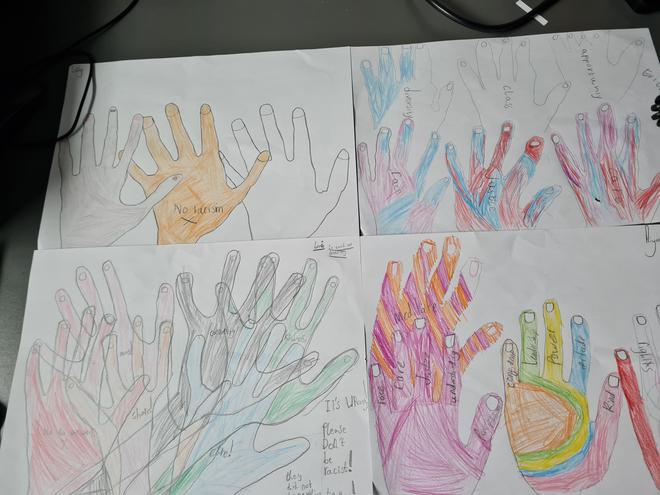
All year groups completed an activity, watched an assembly and shared their findings with their classes.
March 2024 - LOCAL AUTHOR VISIT
Here at Shaftesbury Junior School, we were invited to discuss communities with children with EAL with a
local author, Sue Hobson. Year 5 and 6 children were interviewed about their experiences and challenges, arriving in a new country, without speaking the language. The children were positive and polite, showing character values and enthusiasm throughout. Thank you to all who contributed to the visit.
Black History Month (BHM) 2023
Here at Shaftesbury, we celebrate the diversity of all ethnic backgrounds.
The significance of BHM is to remember important people and events in the history of the African diaspora. Black history is world history. Black History Month represents Black influence around the world. Today, we not only celebrate the Black astronauts, scientists, inventors, artists, and activists of the past; we also celebrate the rise of Black business, arts, and literature that will influence the future.
This year, year 3 children are looking at Black musicians.
Year 4 pupils are researching Black sporting men and women and years 5 and 6 are looking at Windrush.
To support this, we have a guest speaker, who arrived from the Caribbean and has experienced many obstacles and positive events during his life here. The assembly will be a question and answer session to discuss and share experiences.
Black History Month 2024
This year’s theme for Black History Month is “Reclaiming Narratives,” and marks a significant shift towards recognising and correcting the narratives of Black history and culture. By emphasising “Reclaiming Narratives,” we shine a brighter light on our stories, allegories, and history.
Children at Shaftesbury will have the opportunity to complete mindfulness activities as well as share reading sessions to both promote understanding and celebrate our diverse culture. Classes have numerous diverse books to share, read alone and research.
Indonesian Delegates
On Monday 24th October 2022, Indonesian Delegates arrived at our school to look at how children learn English. This included a tour of the school and interaction with lessons. During the visit, both staff and children were filmed and spoken to in Arabic about how they learn. The focus was on how English as an Additional Language (EAL) children learn and contribute to lessons at our school. After the tour, a question and answer session was held with EAL leads and senior management.
European Day of Languages
On 26th September, European Day of Languages was celebrated at Shaftesbury Junior School. We meet and greet each other in our own language, celebrate the linguistic diversity of our school and the community around us and have a assembly to promote our many languages spoken.
The Council of Europe and the European Union, jointly organised this day to encourage language learning across Europe.
International Conference
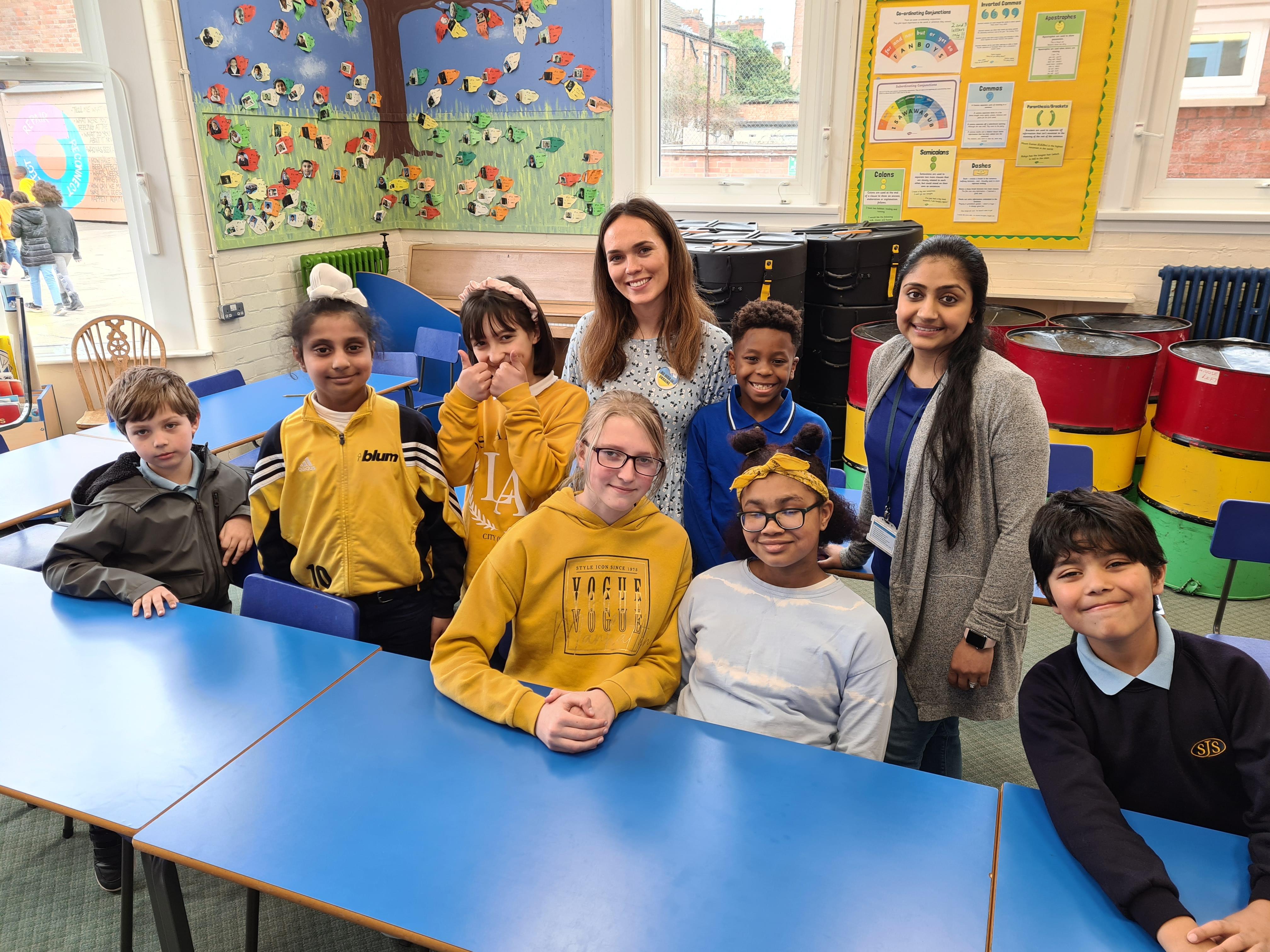
Although the UK is no longer in the European Union, at Shaftesbury we still believe keeping strong links with our European neighbours is important. To that end, some of our Y4 & Y6 pupils have been involved in presenting a workshop at a conference that hosts delegates from all over Europe. This year, the conference was held in Portugal. Unfortunately, we were not able to be there in person but we did present our workshop on peer learning using technology via Zoom. Our pupils did an amazing job on both the project and the workshop and made us incredibly proud.
The links below show some of the work that has been put into this project. With special thanks to Mrs Patel and Miss Morgan for all their hard work and support.
For more information on the international conference (Creative Approaches to Democracy Education), please click here: CANDIICE
Previous EAL events
Czech Republic visitors
During June 2017, we were visited by delegates from the Czech Republic to see how EAL (English as an Additional Language) is taught, along with the diversity, multiculturalism and language acquisition of the school. They were very impressed with children attending the school, who spoke twenty-seven different first languages and the provision given to them.
We were also very proud of our children who welcomed our visitors in their own languages and were observed and asked questions during the visit. Delegates were also shown around the school and observed a Year 5 class lesson along with attending a question and answer session and observing an EAL lesson by Mrs Chilton-Thomas.
A huge thank you to all children and staff for their support during this visit.
French TV visit
Thursday 6th April 2017, a Year 3 EAL group were filmed during a language development session with Mrs Chilton-Thomas. The children were their usual inquisitive selves, asking questions and supporting each other. We looked at foods from around the world, where different foods come from and discussed how they arrived in England.
We continued the lesson with children drawing, labelling and describing their favourite food from the countries their home countries.
Following on from the lesson, some children were asked questions about their religious beliefs and how they learn. Mrs Chilton-Thomas was filmed talking about teaching strategies, the beliefs of the group and how children integrate with children from other religions.
A huge thank you to all children and staff for their support during this visit.
Norwegian delegate visit
26 September 2016, Shaftesbury was visited by the Mayor of Drammen, Norway and his executive team along with a representative from the St. Philip’s Centre Ltd Leicester. The focus was on supporting children who have English as an Additional Language (EAL) and how this is integrated and monitored into everyday school life.
The delegates were shown a presentation and given assessment sheets and the NASSEA framework to demonstrate record keeping, this followed with them observing an EAL lesson with Mrs Chilton-Thomas, then a question and answer session followed about how the children learn.
A St. Philips Centre representative wrote- The whole programme seems to have been much appreciated and they were given much to think about on their return to Norway.
A huge thank you to all children and staff for their support during this visit.
One World Week
Here at Shaftesbury we have celebrated One World Week for many years. Countries are chosen to relate to our intake and activities are designed around this.
Children have had many opportunities to discuss their customs and cultures from around the world. Foods and sport activities are included as well as climate and diversity studies.
One World Week 2021
The theme was
WORKING TOGETHER FOR A JUST PEACEFUL AND SUSTAINABLE WORLD.
Across the school year groups worked on climate change including -
- COP 26
- Rainforests
- Polar Regions
- Oceans and plastic pollution
- Deserts
https://www.oneworldweek.org/


